
Nº 2 Wine cellar, self-hosted
Cellarly
Your cellar, actually mapped.
- Status
- Beta; In the Unraid community store
- Runs on
- Docker, Unraid, your own server; In any desktop or phone browser
- Languages
- German, English
- Your data
- A SQLite file on your own disk
- Price
- Free
- Licence
- AGPL-3.0-only; Source code on GitLab
Most wine apps are either a spreadsheet you have to discipline yourself into keeping up, or a hosted service that puts your cellar, and your spending habits, on someone else’s server. Cellarly is neither: a small app you run yourself, for people who want to know what’s in row 4, position 2 of the fridge.
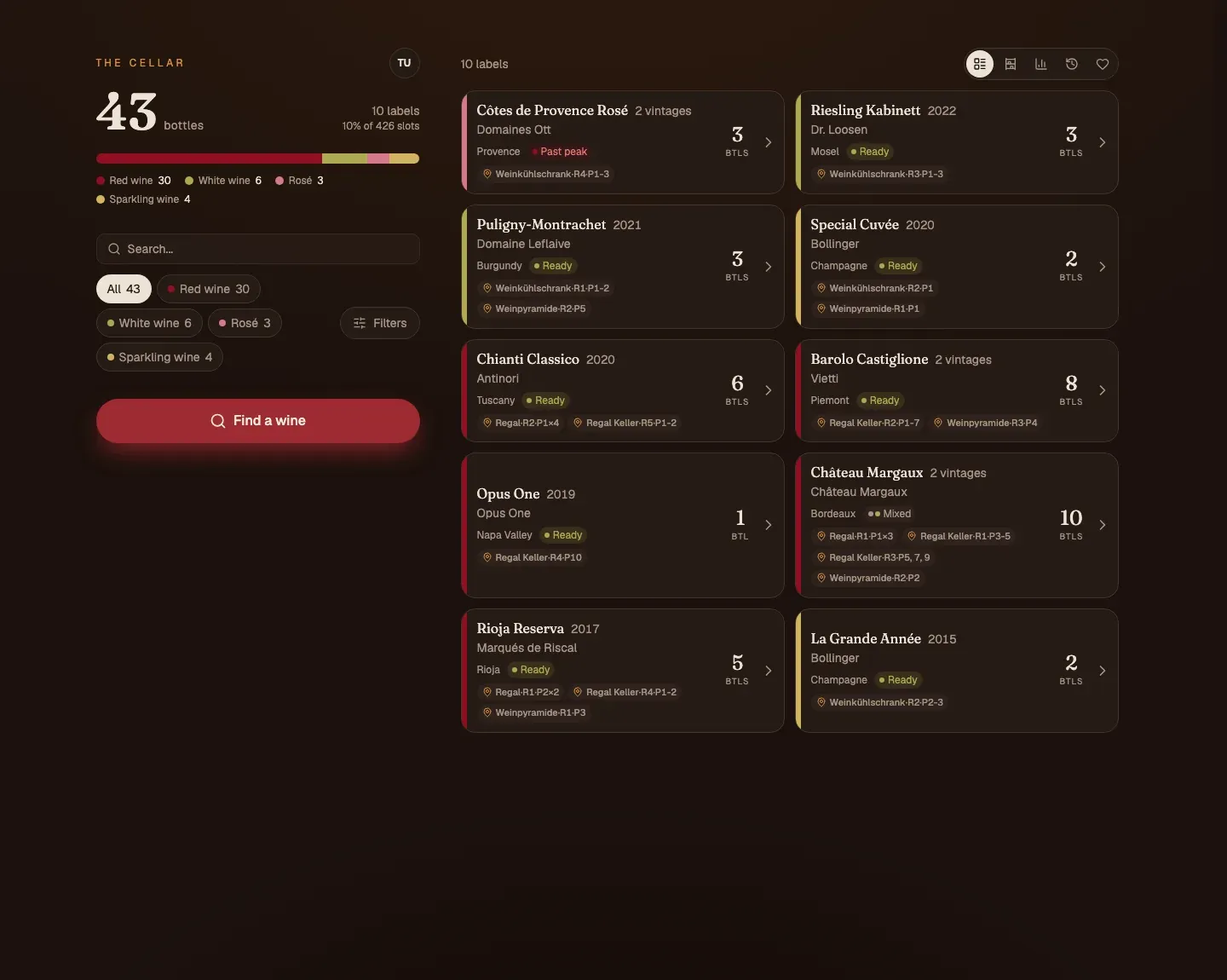
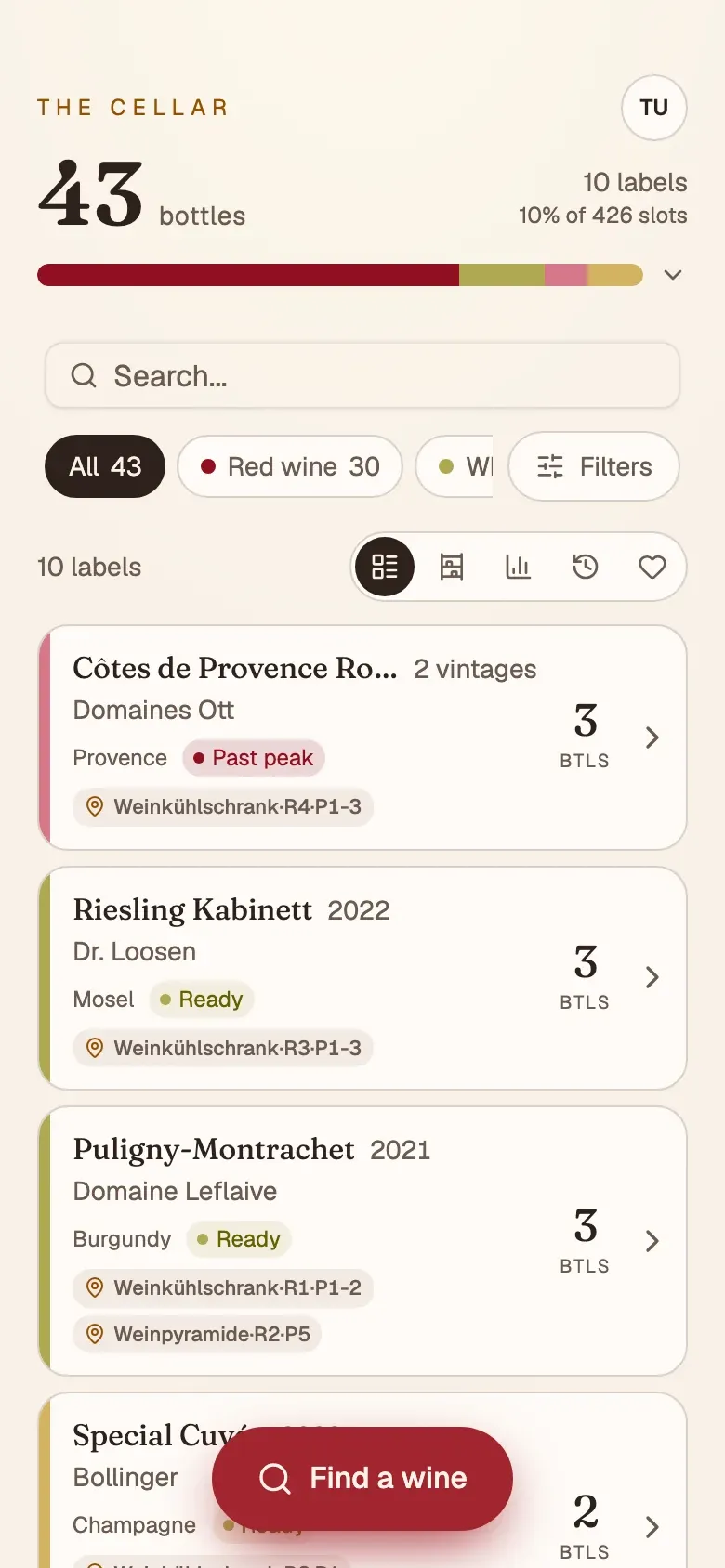
It knows your cellar’s actual shape. Every rack, cabinet or fridge has its own grid of rows and positions, and you can move a case to another slot without re-entering a single field. Rate what you drink, watch each vintage’s drink window, and give everyone in the household their own cellar on the same server, in German or English.
A look inside
From version 1.0.0-beta.8 (November 2026).
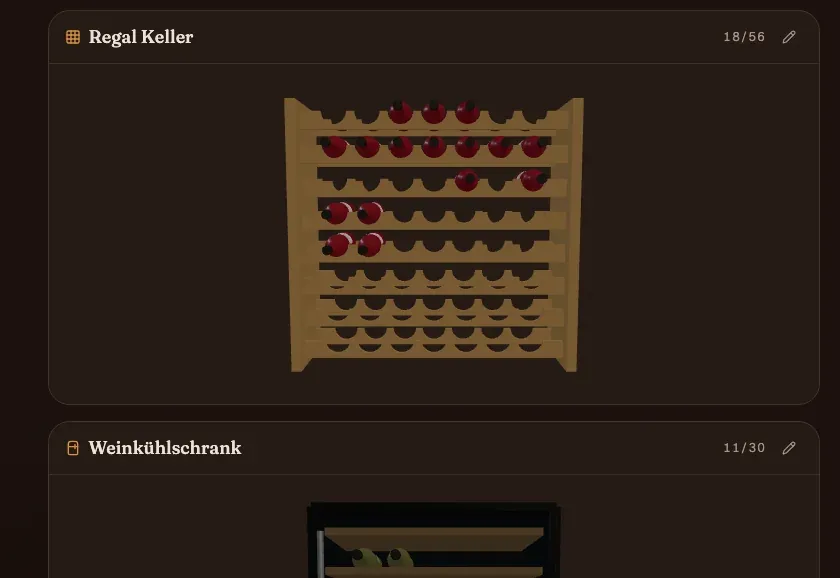
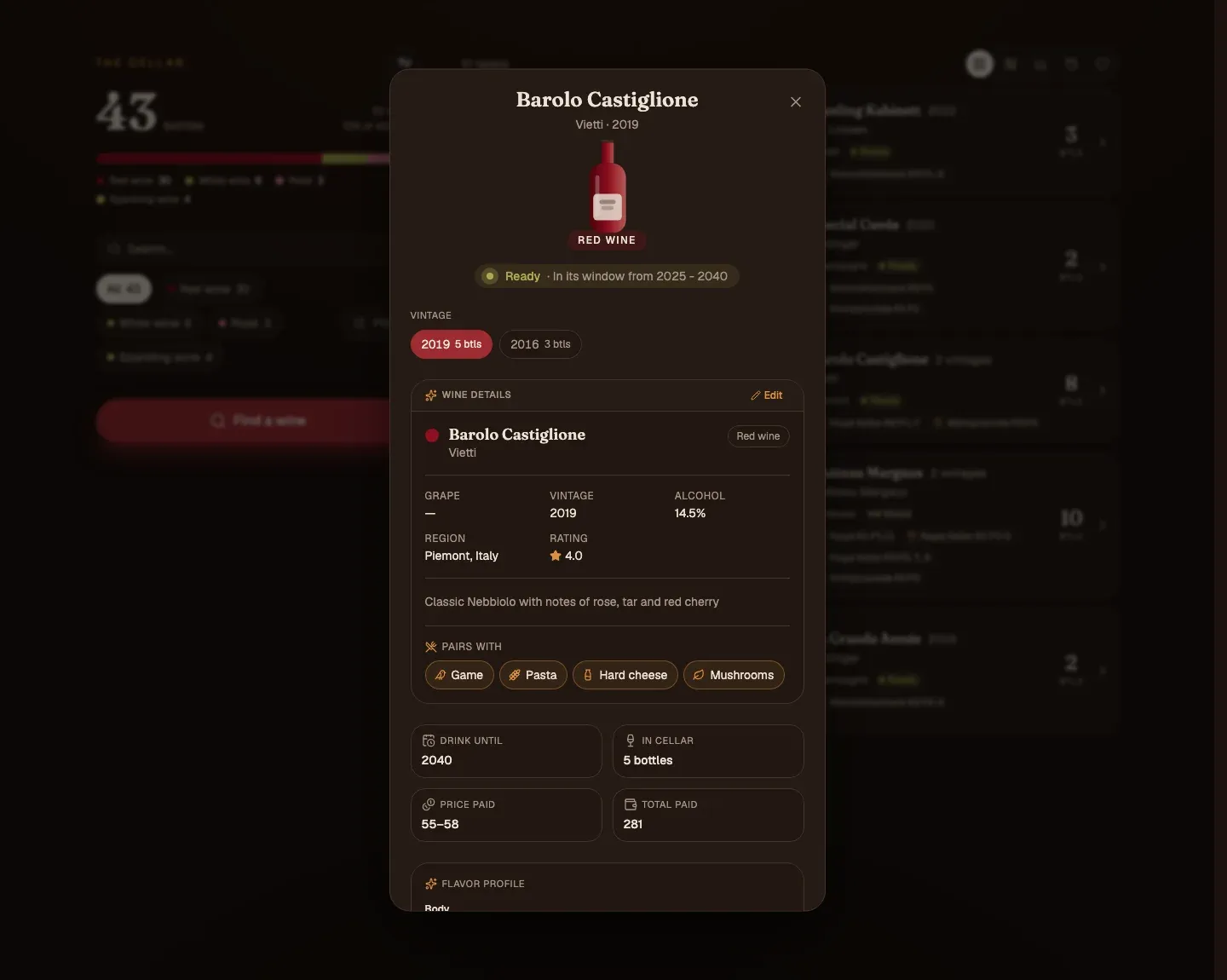
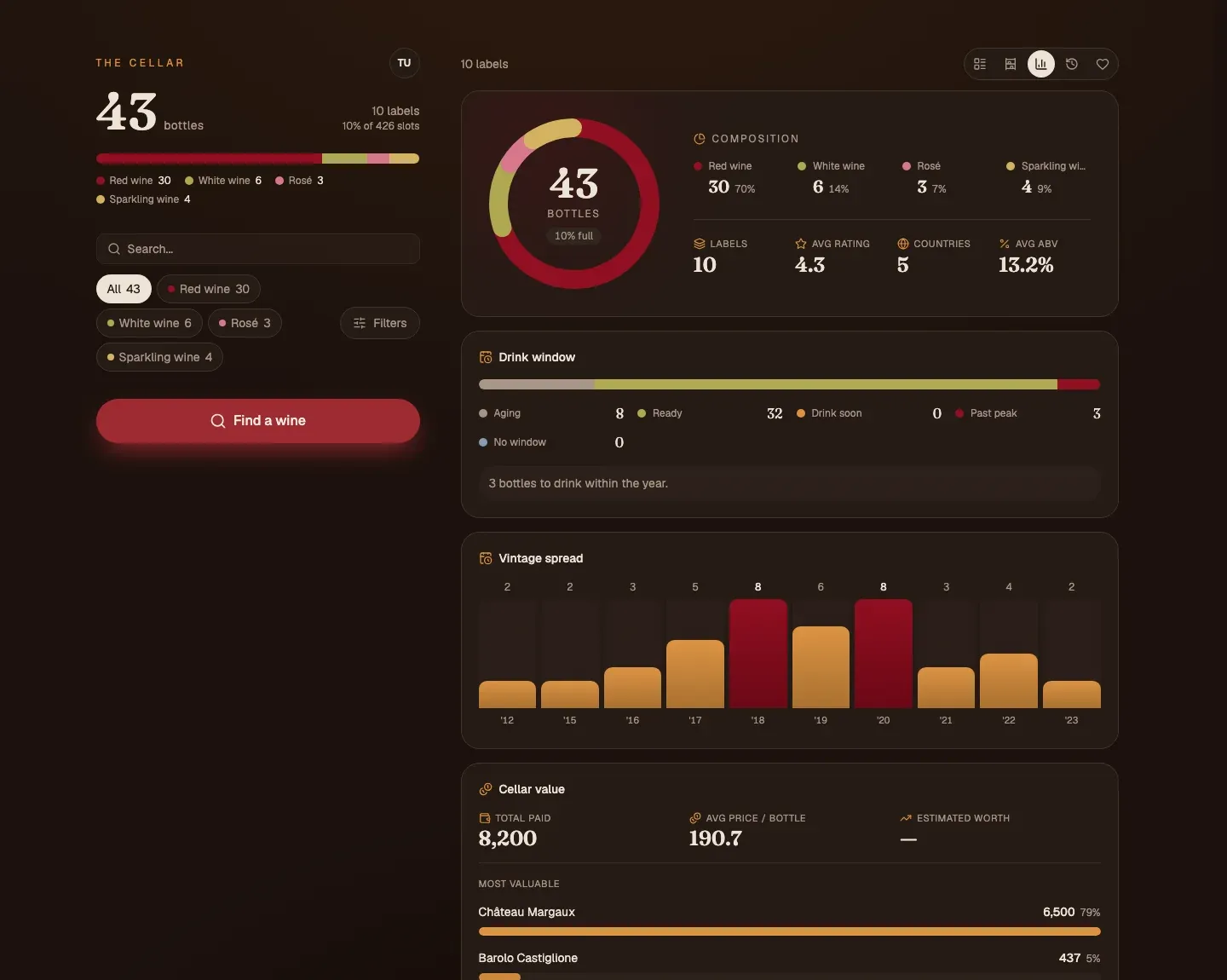
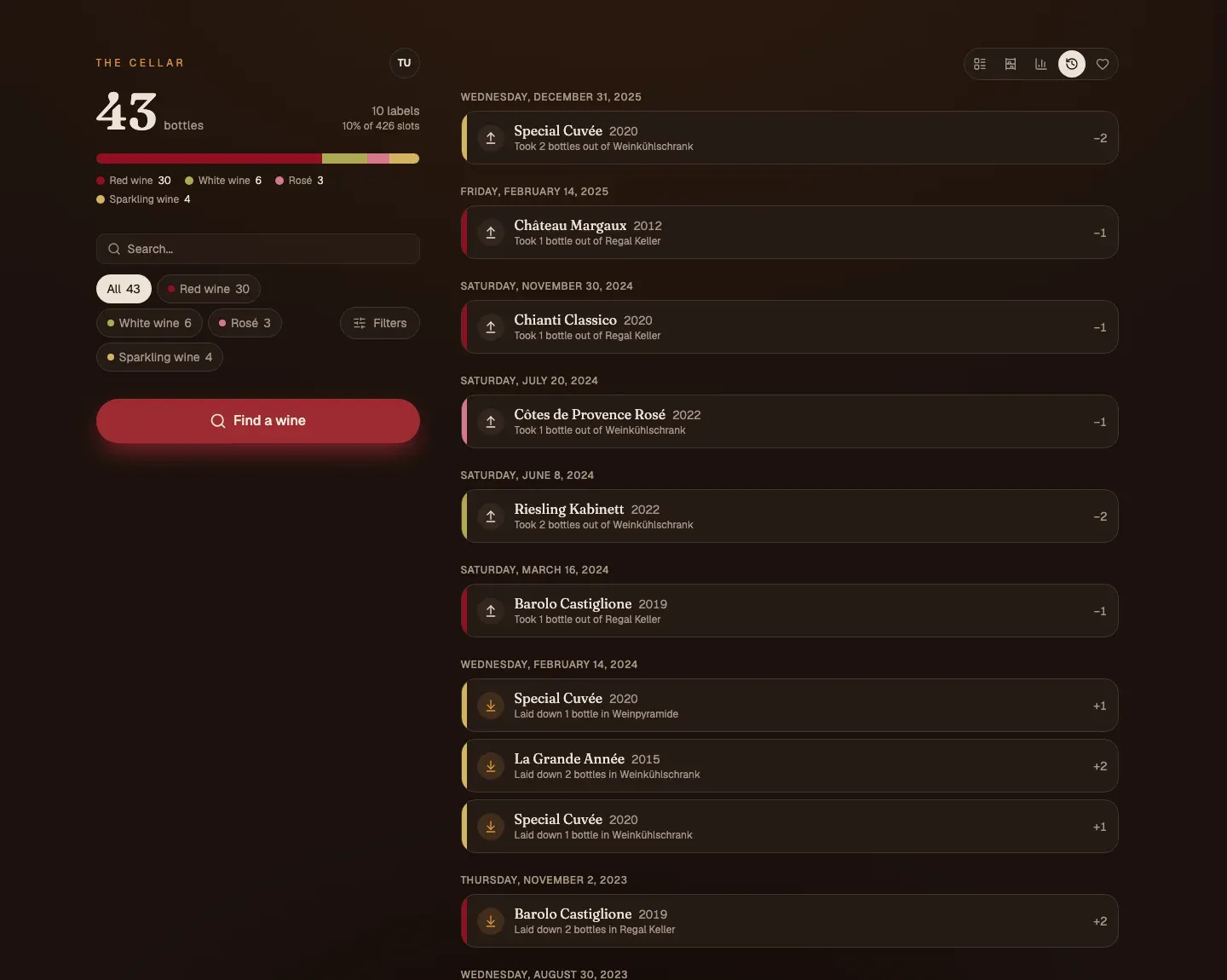
1 A rack in 3D 2 The cellar 3 One wine 4 Statistics 5 History 6 On a phone
Features
What it does
Every bottle, exactly placed
Rows and positions, not “somewhere in the cellar”. A slot holds as many bottles as the furniture actually allows.
See it, don’t just list it
Racks, cabinets, fridges and terracotta pipes as real 3D scenes you can rotate, or a flat grid whenever you prefer.
It does the typing for you
With the optional AI lookups, find a wine by name or photograph its label, and Cellarly fills in region, grape, tasting notes, pairings and drink window, as suggestions you can correct. Without them, you pick from your own catalogue or type it in. A label photo can stay with the wine, saved on your own server and visible only to your account, with or without the lookups.
Look it up, then decide
Search for a wine and read what the catalogue knows about it and the vintages it has seen, then lay a bottle down or put the wine on your wishlist. When you buy it, one step lays the bottle down and takes it off the list. Viewer accounts can look wines up but not add them.
What it’s worth
Composition, drink-window urgency, vintage spread and, once you enter what you paid, the value of your cellar; a purchase’s date and price can be corrected later. With a Gemini API key, Cellarly can also look up a vintage’s typical price and the scores critics gave it, and estimate what your cellar is worth today (Google offers the search this needs only with a paid key).
Nothing gets forgotten
A history of every bottle laid down or booked out, grouped by day. Bottles you only take out for now keep their place and stay out of the history until you book them out.
Backups and exports
Cellarly saves a backup of the database every day and keeps the newest 14, and admins can download the whole database or restore a backup from the Admin page. Each account can export its own bottles, wishlist, ratings and history as spreadsheet (CSV) files. Label photos you keep are part of the database and its backups, not of the CSV files.
One server for the household
Several accounts on one server, each with its own private cellar and one shared wine catalogue, with viewer, editor and admin roles.
Yours, entirely
Your cellar lives on your own server.
A SQLite file on your own disk, label photos you keep included. Cellarly saves a copy before an upgrade changes it, and a backup every day. The AI lookups (Google Gemini) are optional and run under your own API key; only then does your server send search text, label photos and wine names to Google.
- Account with me
- None
- Telemetry
- None
- Ads
- None
- Subscription
- None
Availability
In beta
Cellarly is in beta: you can run it today, but it is not finished, and it changes between betas. Install it from the Unraid community store, or run the Docker image from the project’s container registry, registry.gitlab.com/coderoftime/cellarly (tag beta), on any server; it works in any desktop or phone browser. There is no stable release yet. It is free, and its source code is public on GitLab under the AGPL-3.0-only.
Support
Support & contact
Questions and ideas are welcome by email.
coderoftime@gmail.com